
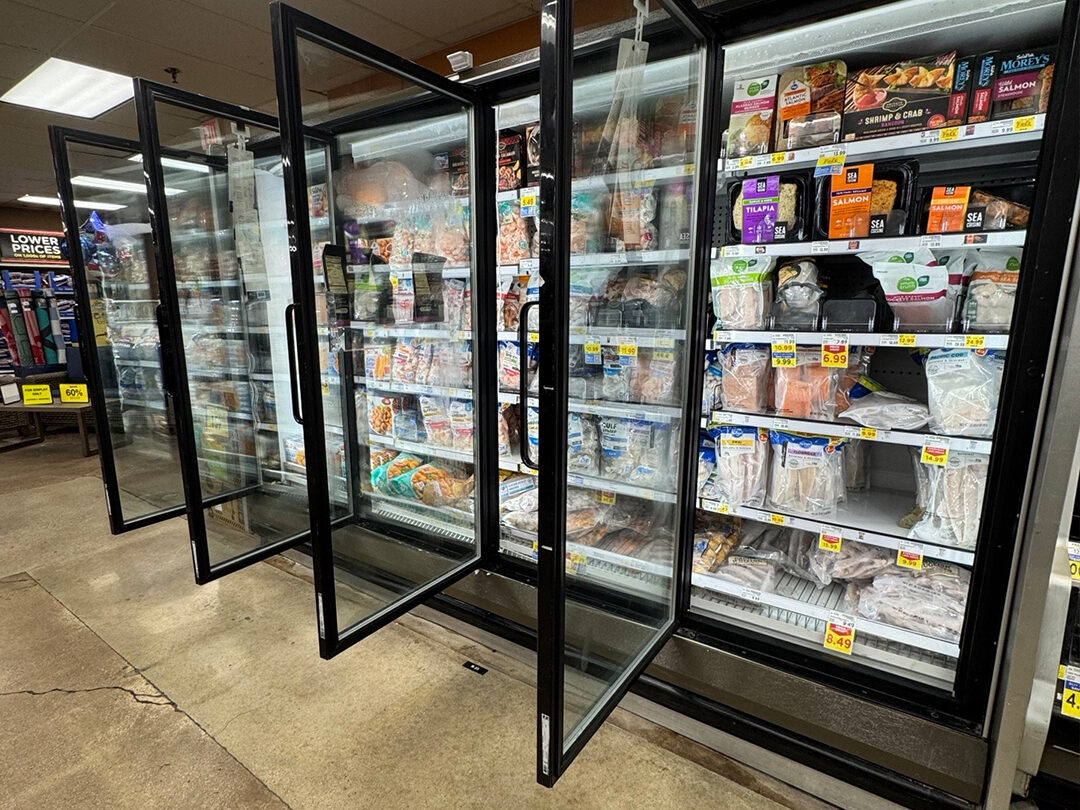
Any business owner can attest to the fact that energy prices have skyrocketed in the past few years, making electricity one of their biggest outgoings. Since 2021, non-domestic energy prices have almost doubled, and despite the fact that they’ve come off the peak, they are still around a shocking 75% higher than they were pre-crisis.
For supermarkets and other types of food shops, refrigeration consumes around 30-50% of the total energy of the site, with shops that specialise in frozen food sitting at the top end of that range. It’s clear from the data that refrigeration and freezing comes with a significant cost for businesses.
Door-level economics
ClarifoilⓇ is an anti-fog film designed for freezer doors, with the aim of enhancing product visibility and reducing energy consumption. Traditional retail freezer doors use electrical heating to prevent fogging, which uses a significant amount of energy.
Assuming that ClarifoilⓇ saves 5 kWh per door each day, over the span of a year, that’s 1825 kWh saved. The recent business average for energy costs was between 22-26p/kWh, so we can assume the following cost savings:
Lower cost saving – 1825 x £0.22 = £402 per door per year
Upper cost saving – 1825 x £0.26 = £475 per door per year
Even if the data was conservatively modelled on a cost of 15p/kWh:
1825 x £0.15 = £274 per door per year.
At the current market rates, the cost savings from installing ClarifoilⓇ are significant, especially taking into account the number of freezer doors businesses may have on site. From an an energy perspective, the carbon saving per door per year is:
1,825 kWh × 0.225 kg CO₂e/kWh ≈ 0.41 tCO₂e/door/year.
If your business focuses on ESG or has environmental goals to reach, using freezer door film can have a real impact.
Estate-level scenarios
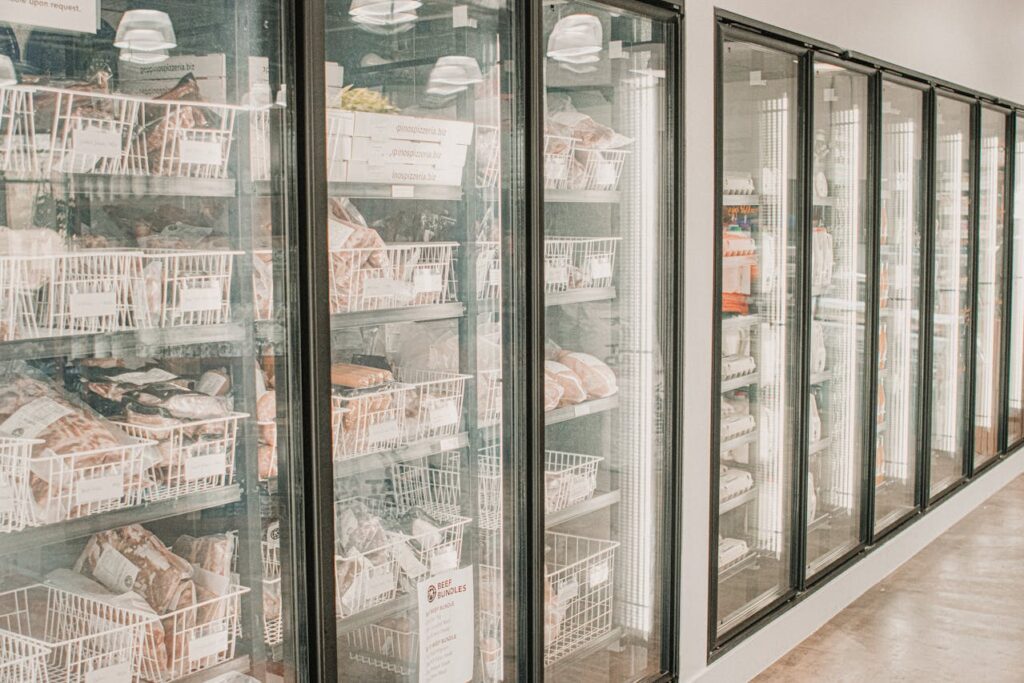
If you think about how many freezer doors you have on a single site, or across all of your sites, the cost savings can be significant. Assuming the following, you could be making these savings by using Clarifoil:
- 5 kWh per door per day
- 10 freezer doors per store
- 15p/kWh (conservative assumption) or 25p/kWh (in line with current market prices)
- CO₂: 0.225 kg/kWh.
| Doors in estate | Annual kWh saved | £/year at 15p | £/year at 25p | tCO₂/year avoided |
| 1,000 | 1,825,000 | ~£274k | ~£456k | ~410 t |
| 5,000 | 9,125,000 | ~£1.37m | ~£2.28m | ~2,060 t |
| 10,000 | 18,250,000 | ~£2.74m | ~£4.56m | ~4,110 t |
If we’re thinking about the data per store, if you had 10 freezer doors, you would be saving 18,250 kWh per year. If energy cost 15p/kWh this would save £2740 a year, or if it was 25p/kWh, you would save £4560 per year.
Payback period
The payback from using ClarifoilⓇ is a major advantage for businesses. Even when modelled at a conservative 15p/kWh, most large ClarifoilⓇ projects fall inside a sub-three-year payback window.
Compared to other methods of refrigeration plant upgrades, installing ClarifoilⓇ generally offers a shorter payback period and also is far less disruptive to store operations. Many upgrades or plant replacements involve a significant down period, but ClarifoilⓇ is quick and easy to install.
The film takes very little time for our team to fit, with minimal disruption to in-store teams, and no need to unplug or empty freezer cabinets. The fact that it is so seamless to install compared to other cost-saving options makes it a very popular choice for businesses.
Working with ClarifoilⓇ
Although it’s an innovative energy-saving solution, ClarifoilⓇ is by no means a new one. In fact, across the UK, Europe and North America, over 150,000 doors have been treated, showing how well the product performs across different climates and types of store.
We have calculated that our ClarifoilⓇ installations have saved our clients a whopping 15 million kWh of electricity per year, which really goes to show what a significant impact it can have across businesses.
A EUROSPAR trial that we carried out further backs up the efficacy of the product. During the test run, the stores recorded a 75% reduction in trim heater power and up to 6 kWh per door per day saved – and, importantly, the freezer doors stayed clear. This shows that not only does ClarifoilⓇ benefit businesses through its energy and cost savings, but also shoppers, who will find it easier to shop when there is better visibility.
Where fridges fit the finance story
For stores that primarily contain fridges, the benefits are slightly different. Freezers are where you will notice the more quantifiable energy benefits, whereas fridges won’t give the same payback. However, applying ClarifoilⓇ to fridges does still offer benefits.
Protected sales
As ClarifoilⓇ keeps doors clear, it offers better visibility for higher-margin lines such as drinks or to-go food, which reduces the risk of customers walking away because they can’t see the items properly. This means more sales and less food wastage.
Reduced labour
During busy periods where fridge doors are being opened and closed, fog can build up quickly. Installing window film means that staff won’t have to spend their time wiping down condensation during peak trading hours, and can spend their time doing something more productive for your business.
Brand image
Clear doors mean a cleaner, more professional look that is easier to maintain across a chain for estate-wide consistency. Plus, if there are any photos taken in store, it will look far more appealing.
Request an estate ROI summary
To find out how much you could save across your business, request a ClarifoilⓇ ROI summary for your estate.
If you let us know your rough store and door counts, along with your headline electricity rate, we will send you a one-page report with:
- £/door/year, £/store/year, total estate savings.
- Simple payback estimate.
- Annual kWh and tCO₂ savings for your ESG reporting.
Get in touch with our team to find out more.
The average shopper spends 37 minutes in the supermarket per visit. This might sound leisurely, but when factoring in the amount of time it takes to peruse each aisle, search for specific products, queue at the tills and put away their shopping, it doesn’t leave much time for browsing.
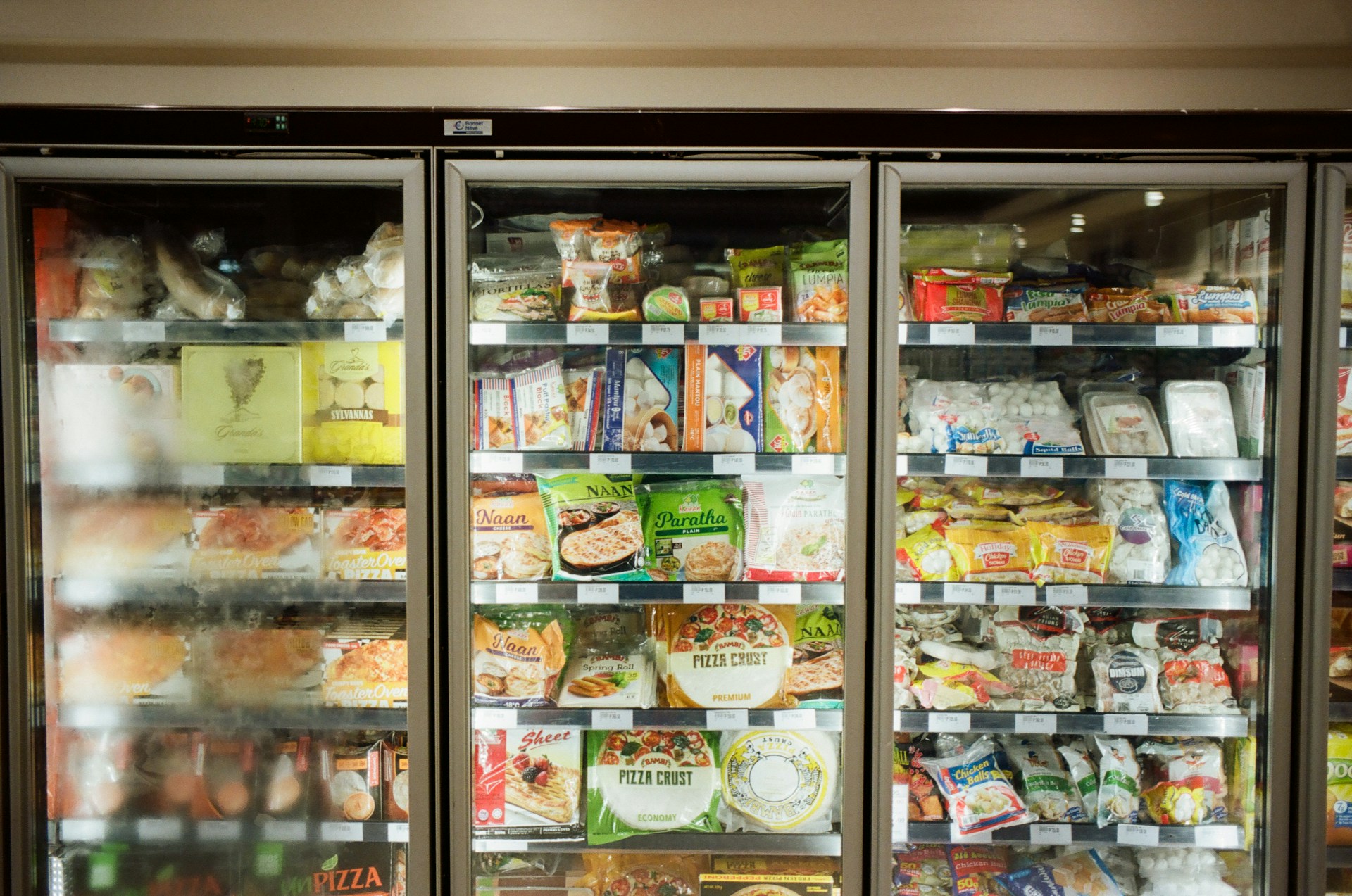
Having merchandise clearly on display is crucial, as consumers just don’t have time to be rifling through the shelves. Freezer doors that easily fog after being opened by shoppers are a real problem for retailers, as they obscure the view inside the cabinet, and can take a significant amount of time to clear again. If the freezer doors in your commercial premises are prone to fogging, it could be taking a hit on your sales.
Why do freezer doors fog?
When a freezer door is opened, the warm air from inside the shop enters and mixes with the cooler air inside the freezer. The temperature difference between the two causes the moisture in the air to form water droplets on the door, which scatter the light and create a foggy appearance.
The reason why it’s such a problem in supermarkets and grocery stores is because the constant flow of customers means the atmosphere is more humid – and the more moisture in the air, the more fog will appear. If the doors are constantly being opened and closed, the condensation will continue to build up.
How do foggy doors impact sales?
With so many time-pushed shoppers, many simply just don’t have time to wait around for the freezer doors to clear, or to keep opening doors to see what’s in each freezer. If they can’t see what they need at a glance, they are liable to walk away and not make a purchase.
Another major factor is that not being able to see products can reduce the amount of impulse purchases made. A study showed that 88% of British consumers make at least one impulse purchase a month, with almost half of these (45%) being made at a supermarket. If your customers can’t easily see your products, they are far less likely to make an impulse purchase. Considering that the average person spends £50.43 a month on impulse purchases, this can really add up, which directly affects your revenue.
Foggy doors can also be a negative signal to shoppers regarding the maintenance of the store. They might assume that a seal in the door is broken, and question the safety of the products in the freezer – or even just generally get the impression that the store is poorly maintained. Perception of your premises and products matter, so making the effort to keep a store looking its best is key.
How does anti-fog film stop freezer doors from fogging?
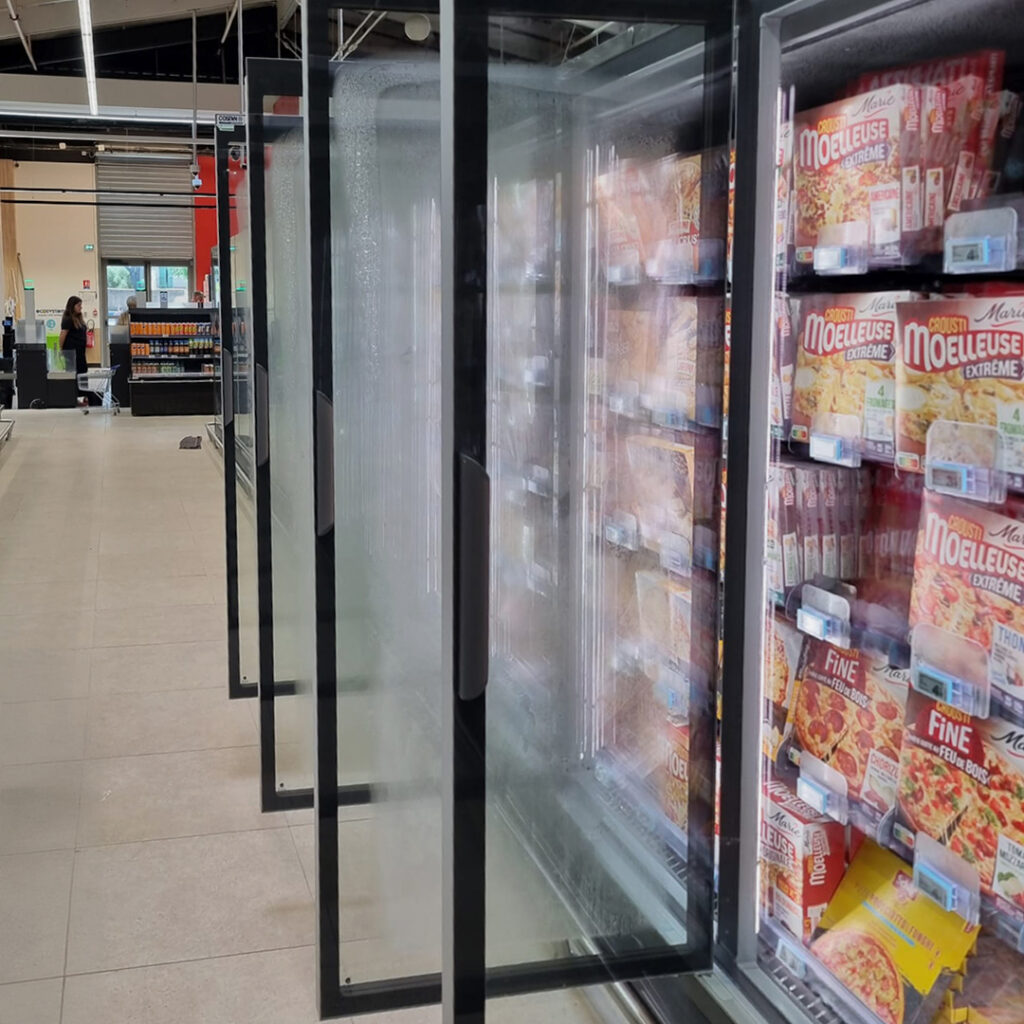
One of the most effective ways to prevent freezer doors from fogging is by installing anti-fog film, like Clarifoil®. As condensation is caused by the interaction between warm air and a cold surface, anti-fog film is designed to counteract this. Anti-fog film contains hydrophilic properties, which means that it attracts water. A hydrophilic surface will actually cause the water molecules to spread more evenly across the surface, rather than grouping together as water droplets, which means that the glass will remain clear.
The anti-fog film also changes the surface energy of the freezer door. As hydrophilic coatings attract water, the film contains anti-fog additives that reduce surface tension, which means the moisture to form a thin, transparent layer. Some films absorb small amounts of moisture, which is released back into the air once the temperature and humidity is more stable. This means that a freezer door that is constantly being opened and closed can stay clear.
Unlike other methods of clearing fog – like heated doors – anti-fog film is a passive energy saving option that doesn’t need any energy consumption at all – so not only is it better for the environment, but it incurs significant cost savings over time. Anti-fog film is extremely durable and gets to work straight away, so there is no downtime. It’s easy to maintain, as it is designed to be durable, resistant to scratching and can be cleaned using standard products.
Prevent freezer door fogging with OVAGLAS
If you’re looking for an anti-fog solution for commercial freezer doors, Clarifoil® Anti-Fog film is proven to prevent fogging and maintain glass transparency. Plus, Clarifoil® anti-fog window film has saved businesses over 148,881 metric tons of CO2, which equates to £68 million of savings on energy bills.
We’d be happy to answer any questions you might have about anti-fog window film or our professional installation services – get in touch with the OVAGLAS team.
February has been another productive month across our UK and international projects. Throughout the month, our installation teams delivered specialist window film installation, glazing enhancement, and retrofit window film solutions across retail, commercial, and public-sector environments. From privacy window film and solar control window film to safety film upgrades and printed graphics, these projects demonstrate the versatility and performance of modern glazing enhancement systems.
Across offices, residential buildings, transport hubs, and shared workspaces, we installed tailored window film solutions to meet specific site requirements. In each case, we focused on improving energy efficiency, enhancing privacy, increasing safety compliance, and elevating interior branding. As a result, this varied portfolio reinforces our expertise in supplying and installing high-performance window film throughout the UK and internationally.
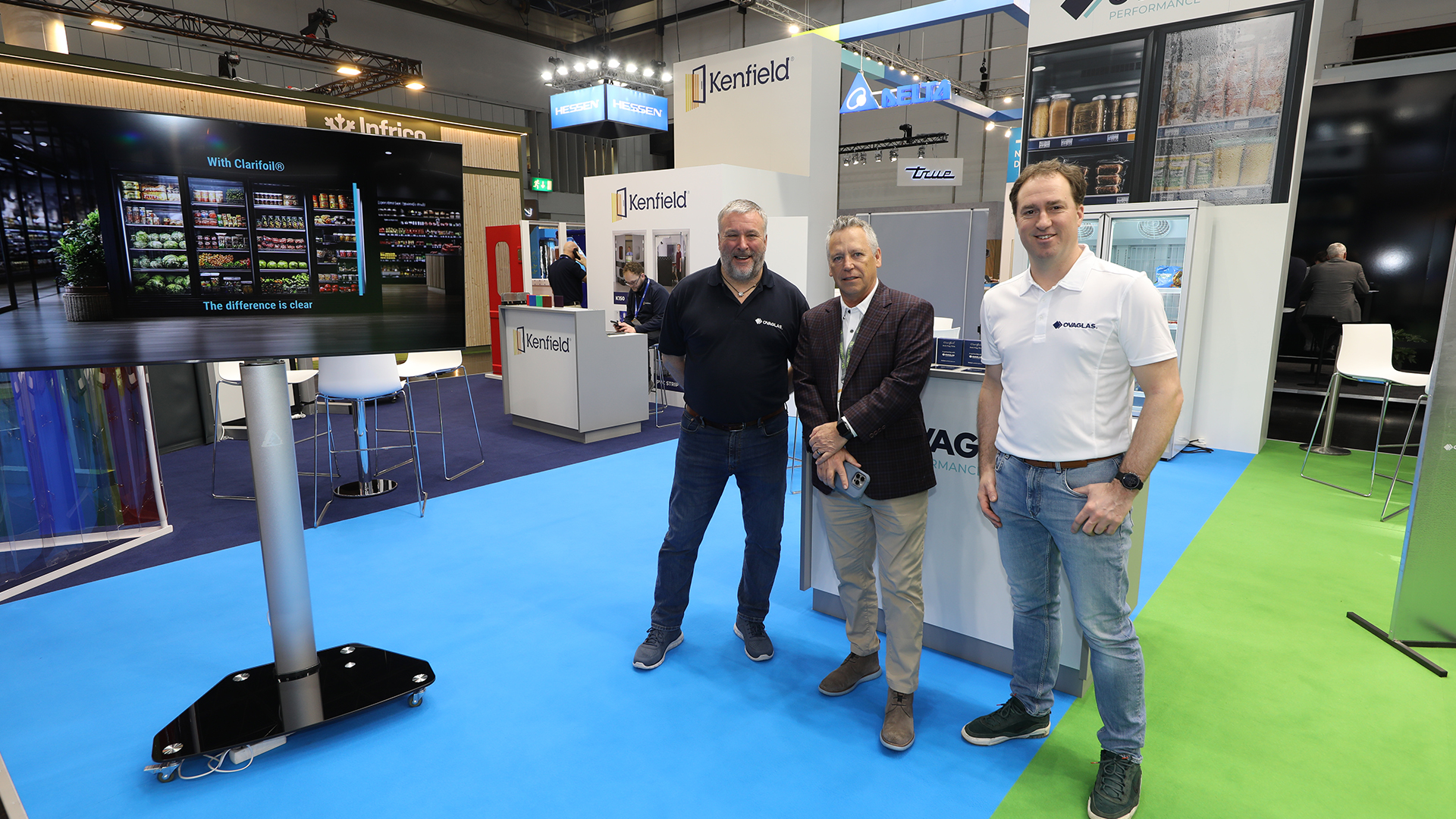
To conclude the month, we attended EuroShop in Düsseldorf, where we connected with industry partners and explored the latest developments in retail design and efficiency.
Below is a summary of the glazing and retrofit projects completed over the past few weeks.
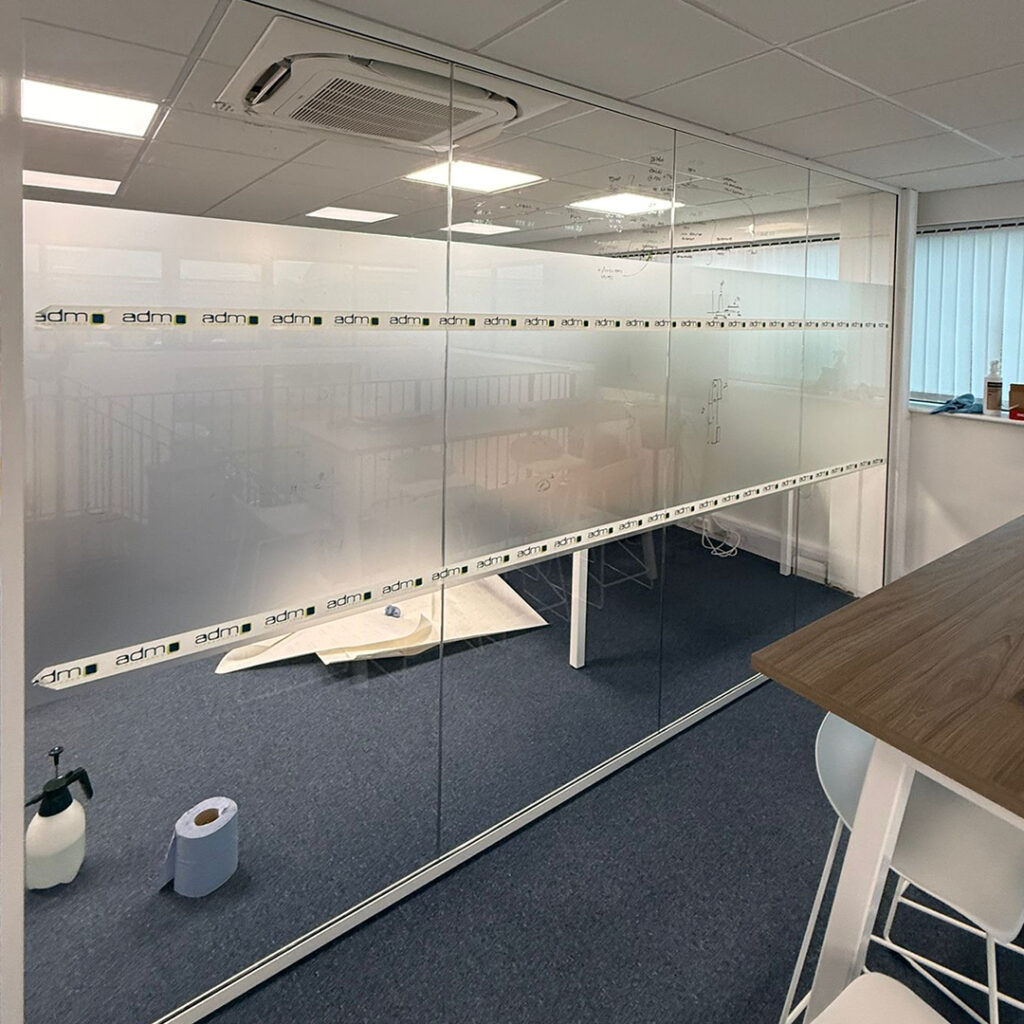
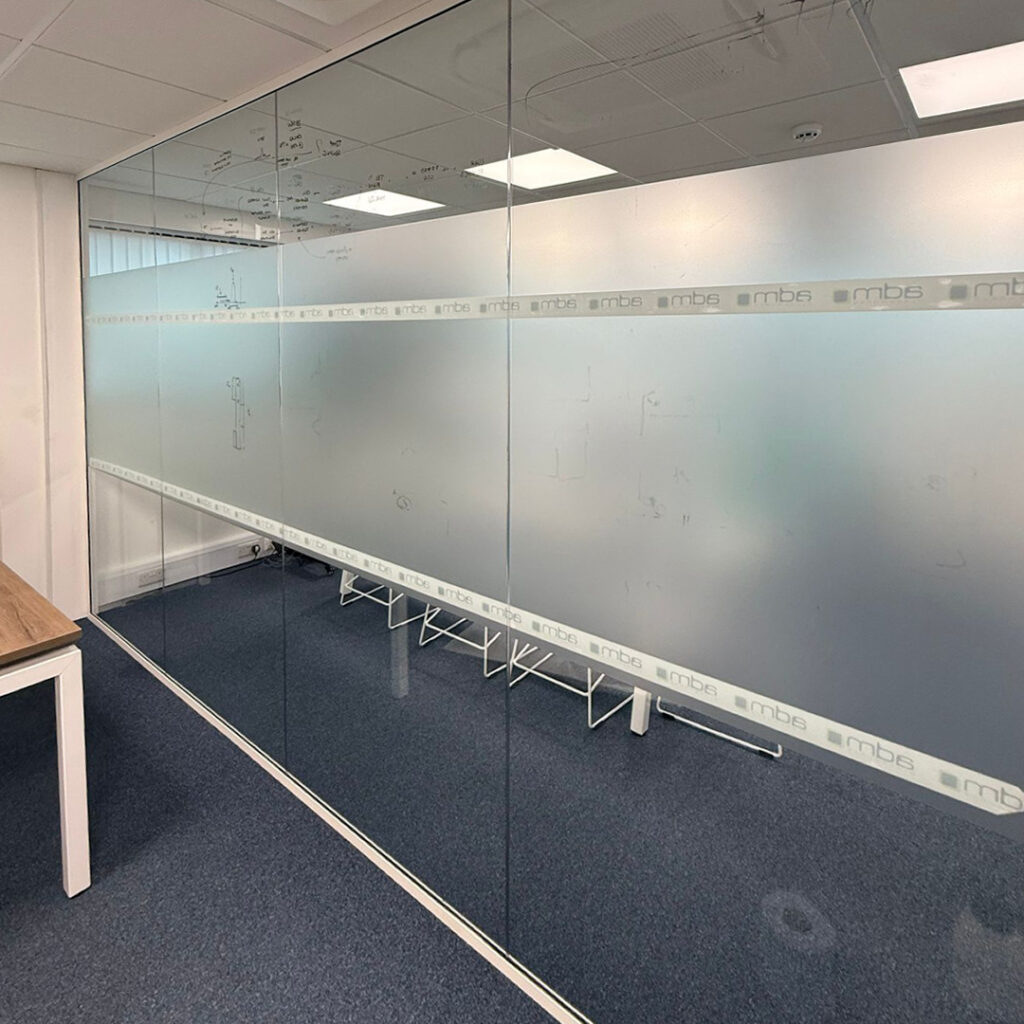
To begin, we installed an Opal frost privacy band in a fully glazed office workspace in Oxfordshire. We aimed to introduce meeting room privacy while maintaining natural light and an open-plan feel. After conducting a detailed site survey, we applied a continuous Opal frost manifestation band at eye level. This approach improved privacy and ensured glass safety compliance. Overall, we delivered a clean, contemporary finish that balanced discretion with design.

Shortly afterwards, we visited a shared office space in Newcastle. There, we installed frosted window film alongside bespoke company branding on glass partitions. While the client prioritised privacy, they also wanted to retain the bright, open atmosphere typical of co-working environments. Therefore, we applied a crisp frosted manifestation band and overlaid precision-cut, full-colour branding. This solution enhanced privacy while creating a bold visual statement.
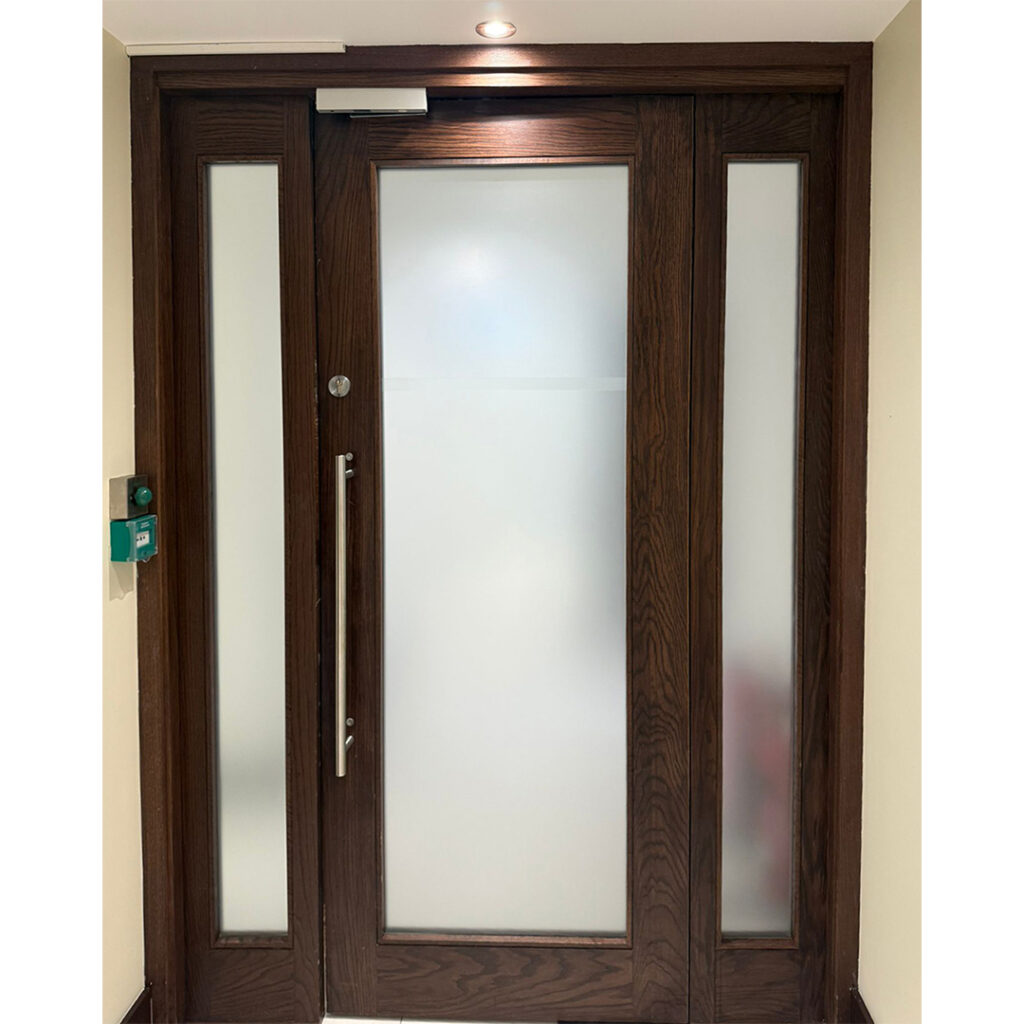
Next, we moved into the hospitality sector. At a hotel and spa, we installed Opal frost film to a glazed entrance doorway. In this setting, operators must balance privacy with presentation. For this reason, we applied high-quality Opal frost vinyl to the central glass panel. This installation created a uniform finish, enhanced discretion, and improved glass visibility for safety compliance. The final result complements the calm, premium atmosphere of the space.
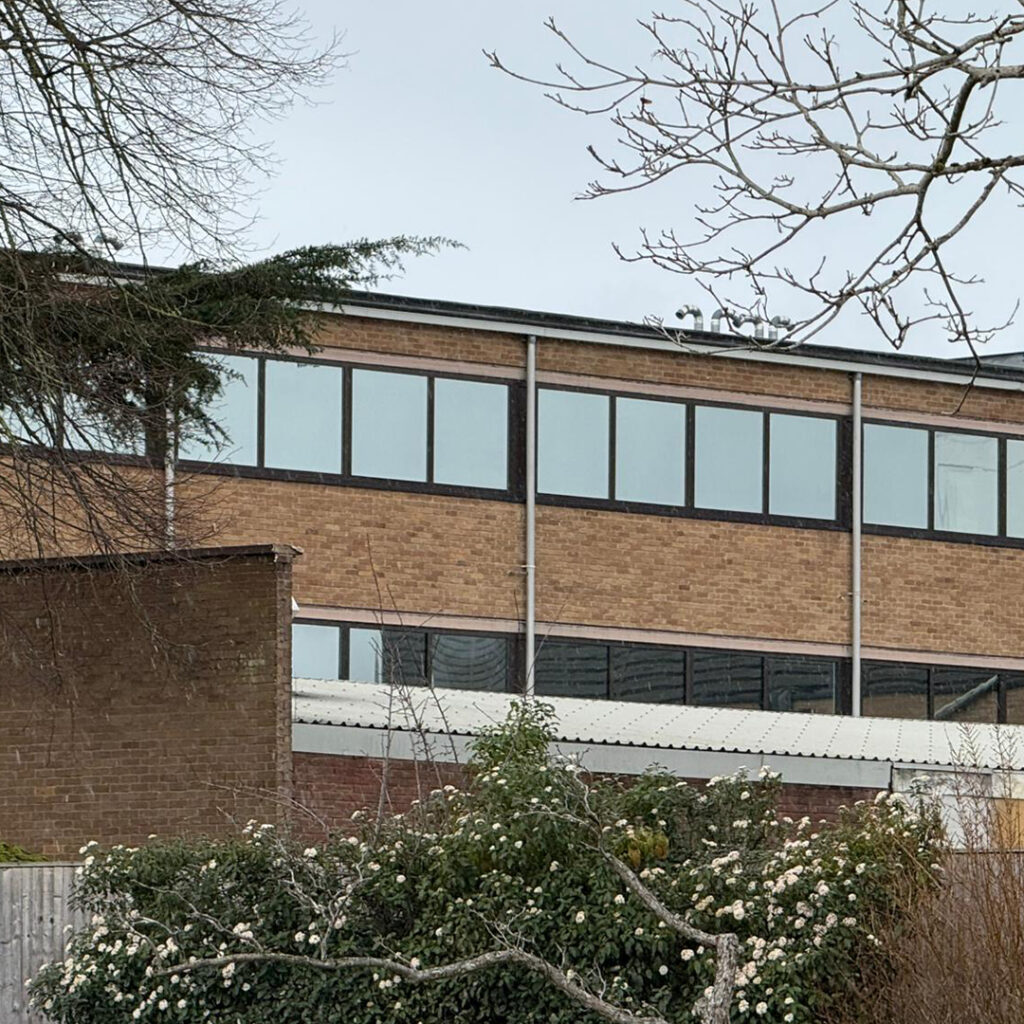
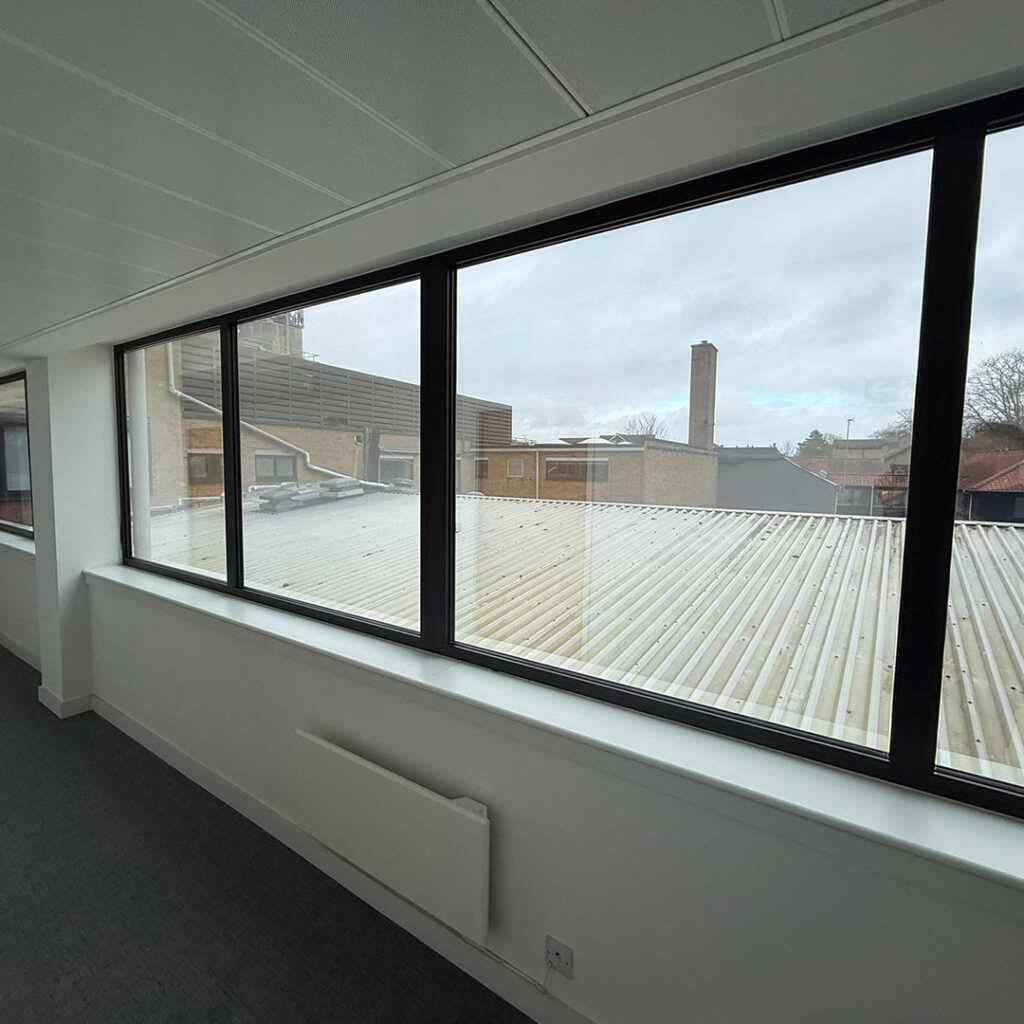
We then shifted from privacy to performance in Oxford. In this residential project, we installed Silver 20 solar control window film in apartment hallways. Large glazed corridors allowed significant heat gain and glare. To resolve this issue, we fitted the film to the internal face of the windows. Silver 20 reduces solar heat, minimises glare, and improves energy efficiency without significantly darkening the space. Consequently, residents now experience a more comfortable hallway environment alongside a cleaner external appearance.
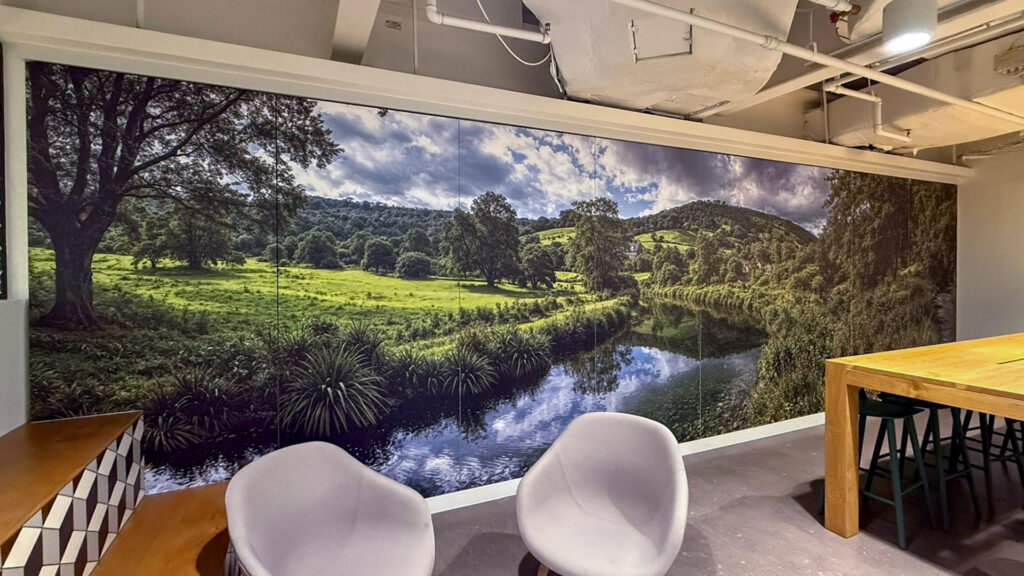
As part of the ongoing revamp of a companies London HQ, we delivered a comprehensive package of internal branding and graphics installations. A large-format wall graphic transformed a plain wall into a striking focal point. In addition, we installed window films, internal signage, and further branded elements throughout the building. Together, these installations created a cohesive and professional fit-out that strengthened brand presence and enhanced the workspace.
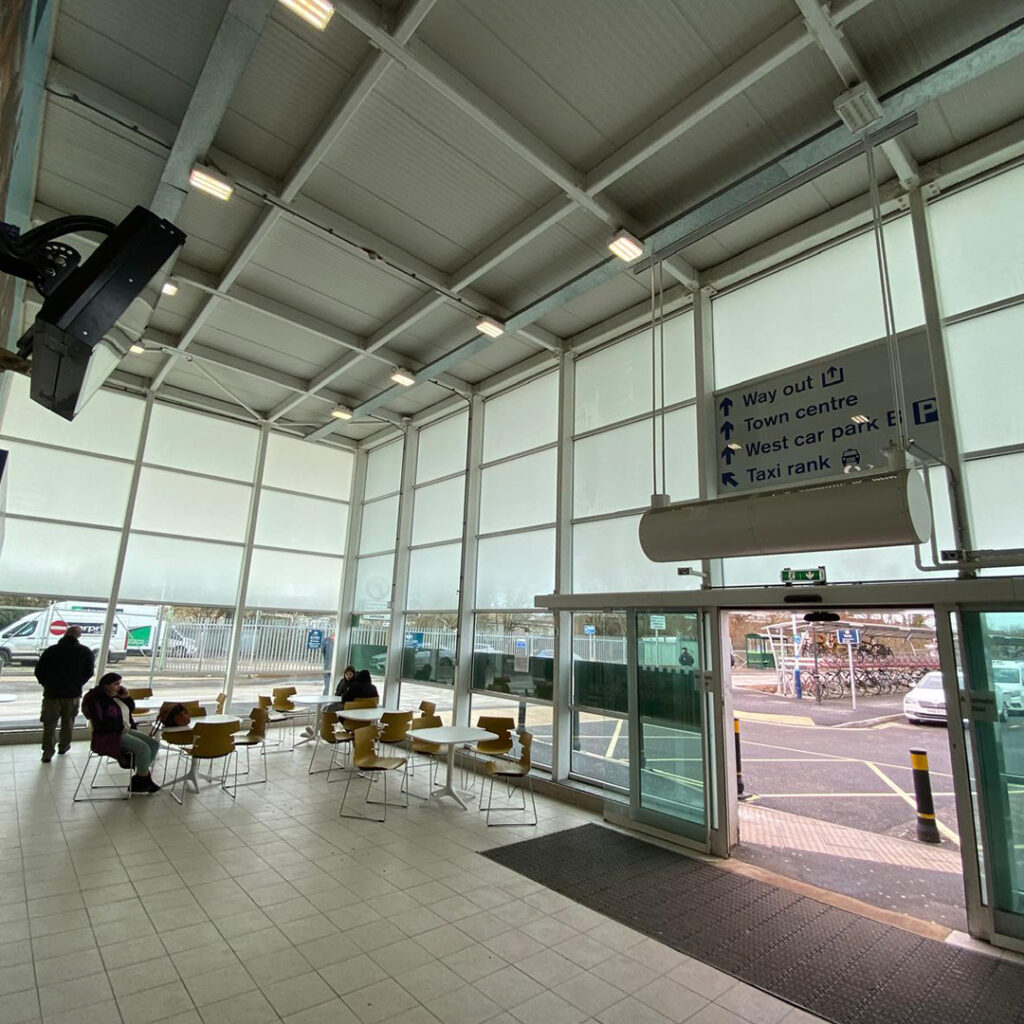
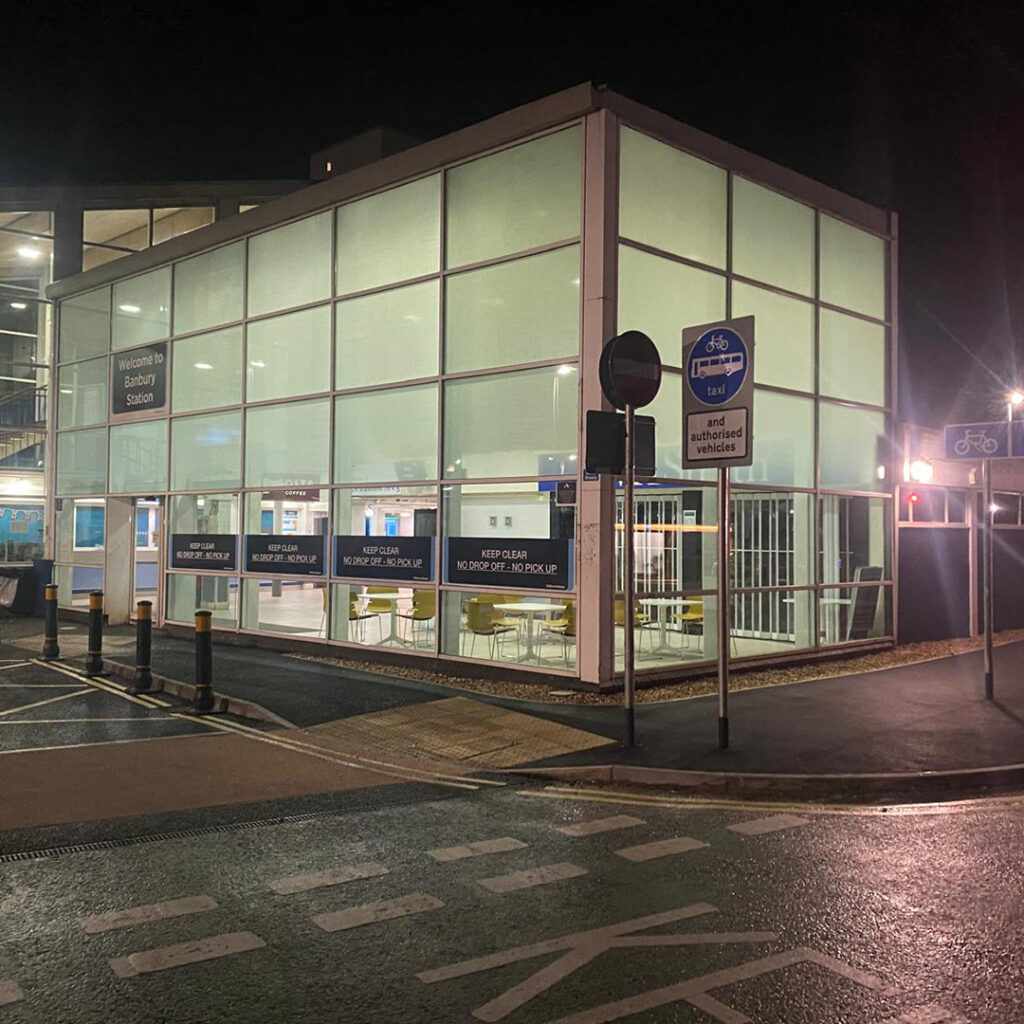
Later in the month, we completed a high-level installation of printed gradient window film at Banbury Train Station. Because of the scale and height of the glazed entrance elevations, we used specialist access equipment and carefully coordinated the works. The printed gradient film creates a smooth fade effect across the glass. It enhances privacy inside while maintaining natural daylight. Externally, the station now presents a clean, contemporary appearance, and internally passengers benefit from improved comfort and discretion.
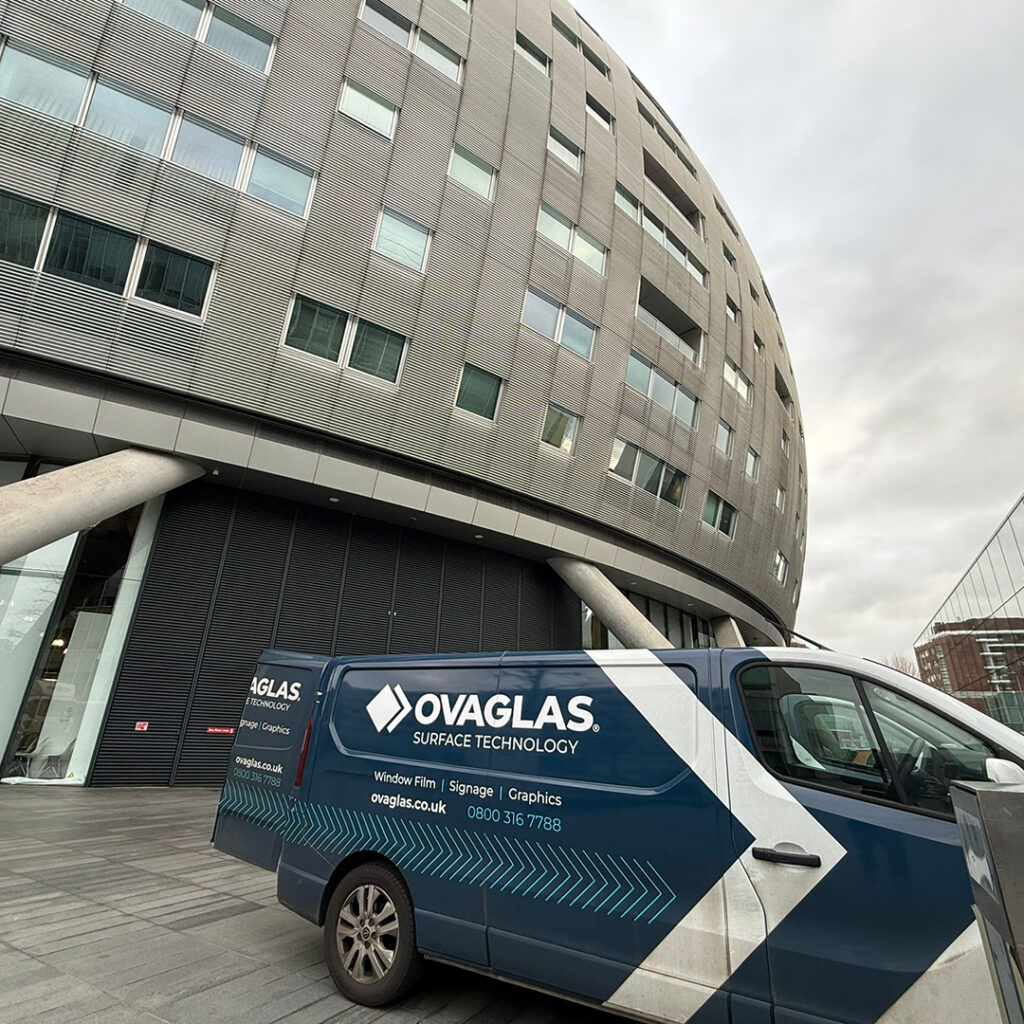
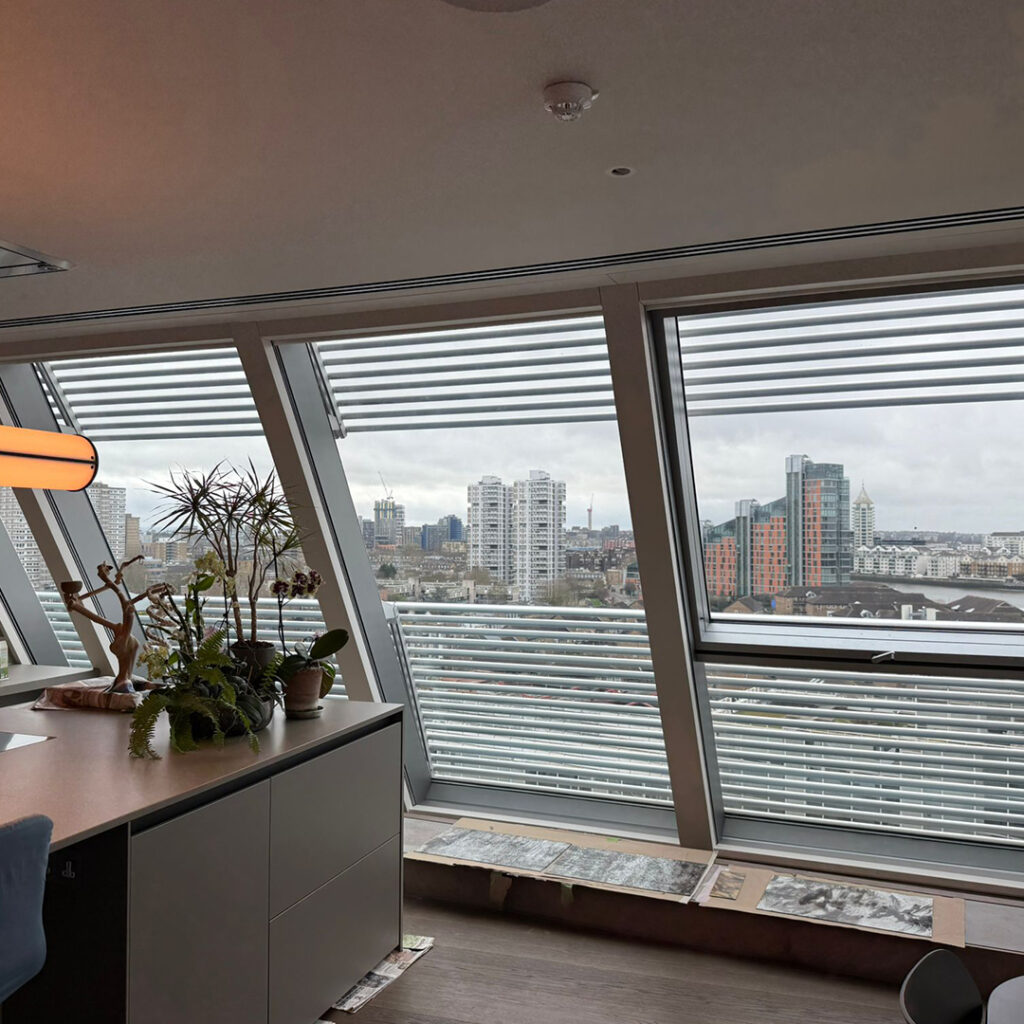
We also carried out a safety film strip and replace project at a Battersea apartment. Over time, the existing window film deteriorated and affected both performance and appearance. We removed the aged safety film, prepared the glazing, and installed a new high-performance safety window film that meets current standards. This upgrade restored clarity, improved glass retention, and enhanced protection without compromising the London views. The project demonstrates why property managers should proactively replace ageing safety window film to maintain compliance and long-term performance.
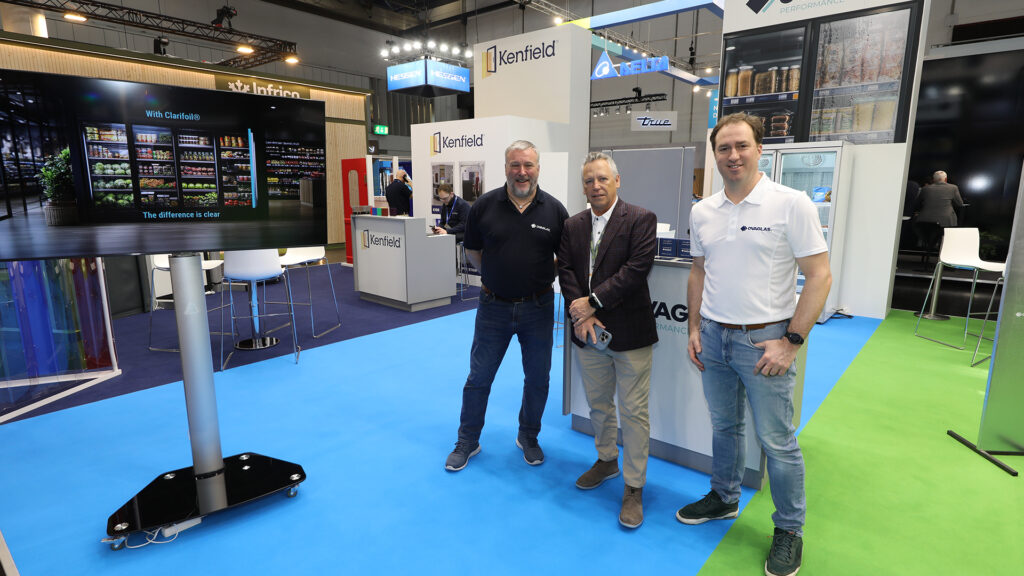
Finally, we closed the month at EuroShop, the world’s largest retail trade fair. In partnership with Kenfield Ltd and Aerofoil-energy, we presented integrated retrofit solutions for the retail sector. Through collaboration, we showed how combined technologies improve in-store performance and energy efficiency. Altogether, EuroShop provided a strong conclusion to a busy and productive month.
If you are considering privacy window film, solar control window film, safety upgrades, or large-scale glazing enhancement, contact our team to discuss your next project.
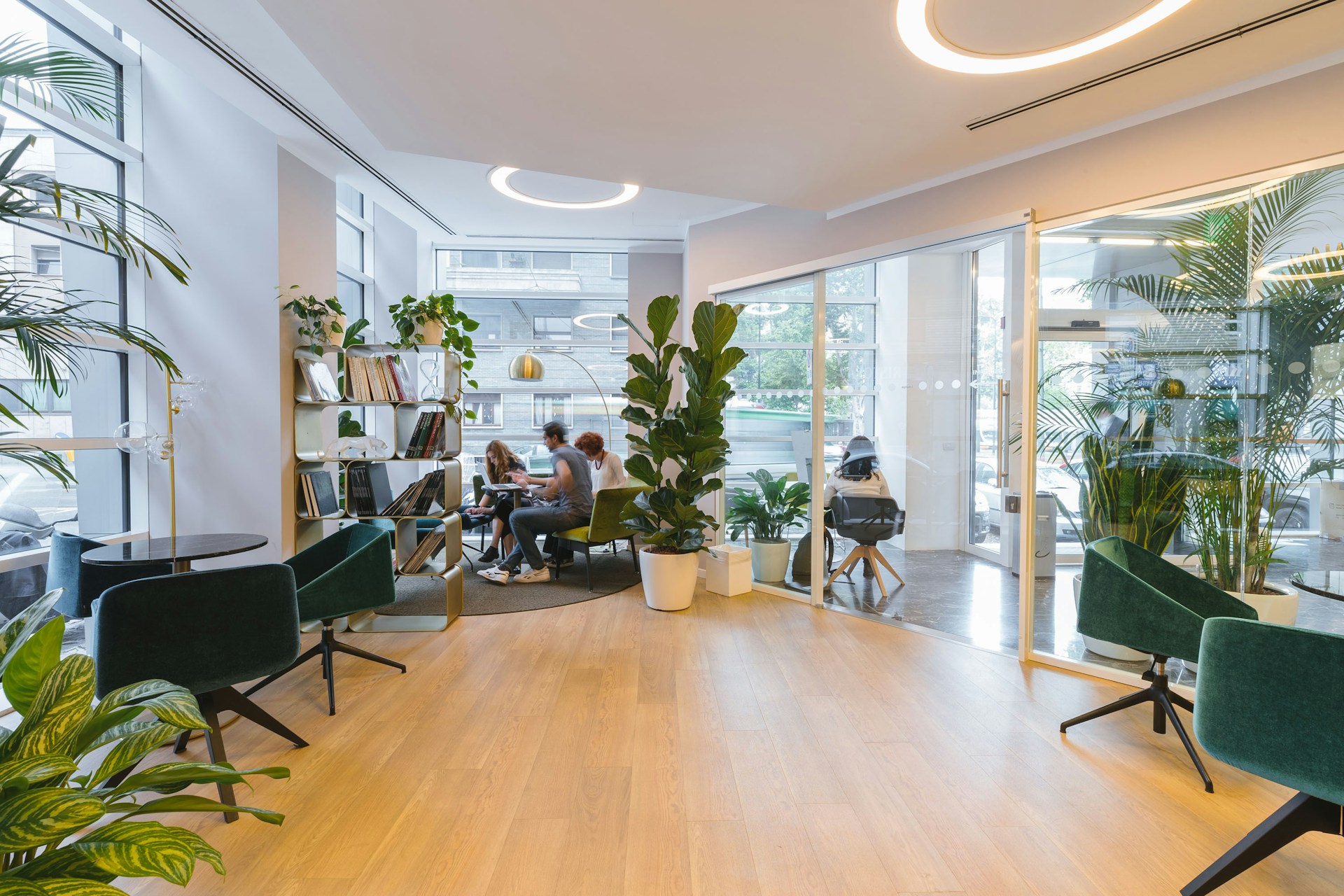
As we are all becoming increasingly aware of our impact on the planet, more and more businesses are looking for ways to reduce their carbon footprint – after all, buildings and offices account for almost 40% of all global energy-related carbon dioxide emissions.
The largest share of a workplace’s carbon emissions comes from electricity, accounting for between 30-40%, with a significant amount coming from heating and air conditioning.
If your business is looking to implement new green initiatives and find ways to be kinder to the planet, a great step is installing window film. Window films are an effective and eco-friendly way to increase energy efficiency whilst reducing energy consumption and the environmental impact of your business.
Why use eco-friendly window film?
It might not seem like a big change, but you might be surprised at how much difference installing window film can make to the sustainability of your business.
Better energy efficiency
Of course, the main benefit of using window film is that it can actually reduce your carbon footprint. UK summers are getting warmer and as for the rest of the year, we know that cold snaps aren’t just a winter thing. As a result, many businesses will be relying on air conditioning and heating throughout the year.
Solar window film is very effective at reducing heat loss or gain to regulate indoor temperatures. When it’s warm outside, energy-saving window film minimises the amount of heat that is coming into the building by blocking or absorbing solar energy. In the colder months, window film helps to retain interior heat, meaning that you can use your central heating less to keep the workplace a comfortable temperature.
As using window film means less reliance on air conditioning or heating, it helps with your overall energy consumption, which leads to a lower carbon footprint. In large commercial premises, this is particularly beneficial, as energy costs can be substantial.
Plus, window films are designed to still let in natural light. On sunny days, the glare reduction properties of window film means that your employees can enjoy the daylight without irritating screen glare, and won’t need to use artificial lighting.
Of course, as well as the benefits for the planet, using energy-efficient window films does lead to cost savings in the long term as your business will be using less energy. These savings could even be reinvested into further sustainability measures.

Better sun protection
If you notice that your office furniture isn’t looking as vibrant as it used to, UV rays are likely the culprit. Over time, the harmful UV rays will damage, fade and discolour furnishings and equipment that is exposed to sunlight. Materials such as wood, leather and textiles are all at risk, and darker and more vibrant colours tend to fade faster.
Every year, 1.2 million desks and 1.8 million office chairs are sent to landfill – we’d bet that many of these are still in a useable state, but just look a bit past their best. Using window film can block out the rays that cause furniture damage, meaning that your office furniture will last longer, reducing the need to replace them prematurely. Less waste and less resource consumption will always have a positive impact on the planet!
Avoid replacing windows
If you’re looking to upgrade your windows, adding film to your current windows is a far more sustainable choice than completely replacing them.
Installing window film negates the need to remove and dispose of your existing windows, which cuts down on the amount of waste that will be sent to landfill. Window manufacturing can be bad for the environment, as many types of windows use a significant amount of energy to produce, and the production process emits harmful pollutants and greenhouse gases.
Benefits of sustainability initiatives
There are many advantages of green initiatives for a business. Naturally, the cost-saving benefits are a key advantage, but there are more positives! Being a more sustainable business can improve your image – showing a genuine interest in the environment is very appealing to both stakeholders and customers. It can also help you work your way to certain certifications that can boost the business’s corporate image, and can even help when applying for certain funding if you can show your commitment to the planet.
Eco-friendly window film installation
OVAGLAS offers a wide range of quality window films, including energy saving window films, privacy window films and decorative window films, all of which provide a sustainable alternative to new windows. Get in touch with the team at OVAGLAS to find out what kind of difference window films can make to your business.
.svg)


